The 24th Annual Session of the Committee of Experts on Public Administration (CEPA) was held at the United Nations Headquarters, New York, from 7 to 11 April 2025. The theme of this remarkable event was, “Governance and institutional perspectives on advancing sustainable, inclusive, science and evidence-based solutions for the SDGs”.
What is CEPA?
The United Nations Committee of Experts on Public Administration (CEPA) is a subsidiary body of the UN Economic and Social Council (ECOSOC). Composed of 24 independent experts from around the world, these advise the UN on issues of public administration, governance, institutional capacity-building, and civil service reform.
CEPA’s role is pivotal in guiding member states to build transparent, accountable, effective, and inclusive institutions that can deliver on the 2030 Agenda for Sustainable Development.
Through its sessions and reports, CEPA informs and influences global public sector reform by promoting standards, tools, and practices in public service excellence.
This year’s theme acknowledged the need for policy decisions grounded in data, empathy, and foresight. In a world facing climate change, digital disruption, and inequality, the call for evidence-based governance has never been more urgent.
CEPA’s 24th session addressed questions such as:
How can governments ensure their institutions are inclusive and resilient?
What mechanisms are needed to integrate scientific knowledge and public input in policy-making?
How can youth, marginalized communities, and non-state actors contribute to public administration?
These questions are at the heart of IPPDR’s mission.
IPPDR at CEPA 24: Youth, Peace, and the Power of Participation
Under the visionary leadership of Ambassador Dr. Andrise Bass, IPPDR’s delegation proudly participated in key discussions, shared insights from its youth training programs across 57+ countries, and engaged with international experts on how to make institutions more responsive, inclusive, and future-oriented.
Key Messages Shared by IPPDR at CEPA
Youth must be seen as institutional stakeholders, not just beneficiaries Recognizing the importance of inclusive governance, IPPDR emphasizes the need to institutionalize youth inclusion in decision-making, particularly in the realms of local governance, public finance, and climate response.
Peace and Governance Are Interlinked In addition to structural reforms, sustainable public administration requires a culture of peace, ethics, and empathy within institutions.
Evidence Must Be Holistic While scientific evidence remains fundamental, it is equally important to complement it with human-centered data—including lived experiences, cultural context, and community feedback.
IPPDR’s Recommendations Based on E/C.16/2025/8 at the CEPA
In response to CEPA’s working document E/C.16/2025/8, IPPDR submitted a series of evidence-backed, youth-informed recommendations to enhance institutional resilience and social trust:
1. Mental Health and Psychological Resilience
To begin with, governments must provide mental health support for public servants and youth leaders. Indeed, emotional fatigue and burnout not only affect individual well-being, but also directly impact performance and meaningful participation in governance processes.
2. Family Support and Work-Life Balance
In addition, policies should be designed to support the families of civil servants and ensure that youth balancing caregiving responsibilities with civic duties are not excluded from active participation.
3. Transparent Decision-Making and Accountability
Furthermore, promoting open governance dashboards, citizen feedback loops, and clear communication channels is essential for fostering transparency and enhancing public trust.
4. Leadership Training for All Ages
In pursuit of inclusive leadership, it is essential to establish intergenerational leadership incubators and mentorship pipelines, thereby equipping youth, mid-level professionals, and elders for effective and collaborative administration.
5. Feedback as a Governance Tool
To ensure comprehensive and equitable policies, it is crucial to institutionalize public feedback, especially from young people, women, and Indigenous communities, so as to guide reform and implementation at the grassroots level.
Gratitude and Commitment
We extend our gratitude to the CEPA Secretariat, UN DESA, and all participating experts and delegations for creating space for authentic dialogue, accountability, and transformation.
In particular, we thank CEPA for valuing the critical role of civil society and for acknowledging that good governance is not merely technical—it is, above all, human, inclusive, and ethical.
The Path Forward: Building Institutions With—and For—the Future
In conclusion, as we reflect on CEPA 24, we reaffirm our belief that: “Public institutions are not only instruments of service; we are guardians of hope—and it is the youth who must help carry that flame forward.”
Ambassador Dr. Andrise Bass and the IPPDR team continue to work with global partners to advance capacity-building, policy education, and diplomatic leadership programs—all of which shape peace-driven, transparent, and future-ready public institutions.
Find more information
For partnerships, training opportunities, and official documentation from CEPA 24 Website: www.ippdr.org Email: info@ippdr.org
The World Economic Forum (WEF) Annual Meeting – Davos, has cemented itself as a critical venue for addressing global society’s pressing challenges. It brings together senior government officials, policymakers, business leaders, and geopolitical strategists to discuss cooperative solutions to today’s most pressing issues.
However, the forum’s effectiveness in driving real-world policy and global stability is often called into question. Leaders from the public and private sectors are still feeling the aftershocks of the current global geopolitical uncertainty, economic transformations, and rapid technological innovation.
International Platform for Global Transformation
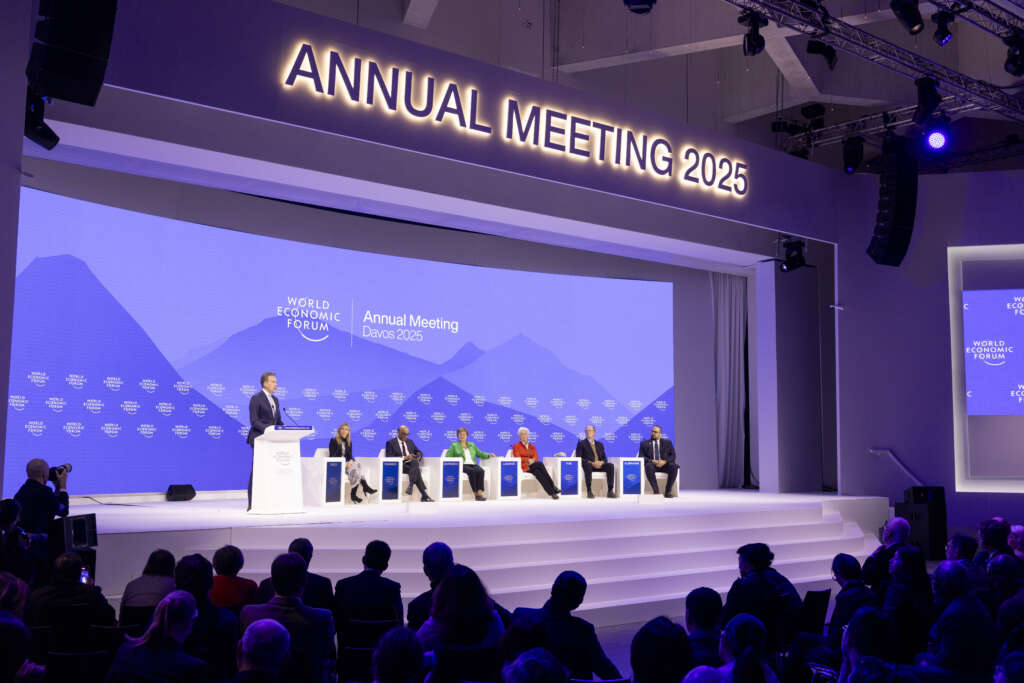
More than 3,000 of the most influential leaders, including more than 50 heads of state and government, gathered from January 20 to January 24, 2025, to take part in the 55th Annual meeting of the World Economic Forum in Davos, Switzerland.
Credit: World Economic Forum
Its format centered on resolving collective challenges and creating pathways to sustainable solutions under the umbrella slogan “Collaborating for the Intelligent Age”. In a world that has become ever more fragmented as power dynamics shift, inequality rises, and climate action looms urgently on the horizon, the Davos Forum presents the opportunity for its unique but under-utilized space for strategic dialogue exacted from pragmatic and tangible results.
Credit: World Economic Forum
World Economic Forum event key topics included
Artificial Intelligence (AI): Discussions centered on AI’s transformative potential and the need for global cooperation to ensure its benefits are widely shared. Leaders emphasized the importance of regulating AI to prevent misuse and to promote ethical applications.
Climate Change and Energy Policies: UN Secretary-General António Guterres highlighted the pressing dangers of climate change, criticizing global dependence on fossil fuels. The forum also addressed the implications of the U.S. administration’s energy policies under President Donald Trump, which advocate for fossil fuel expansion.
Global Trade and Tariffs: Trade dynamics, particularly in light of potential new tariffs by the U.S., were a significant focus. British Treasury Chief Rachel Reeves expressed hopes to avert these tariffs, reflecting broader concerns about global trade stability.
Credit: World Economic Forum
Geopolitical Stability: The concept of a “geopolitical recession,” characterized by increased polarization and reduced global cooperation, was discussed. Leaders emphasized the need for collaborative efforts to address major global challenges amidst this backdrop.
Africa’s Development: African leaders highlighted the continent’s potential, focusing on capitalizing on its young population and bridging digital divides. Discussions included strategies to harness Africa’s demographic dividend and promote digital inclusion.
Key Challenges for Policymakers and Government Officials
Credit: World Economic Forum
Geopolitical Fragmentation The forum exposed growing fissures between the world’s major powers, especially over trade, technology and security. Policymakers must thus nurture multilateral cooperation amidst rising bilateralism and protectionism.
Fixed gaps between Policy Alignment and Implementation. Though ideas abound at the Davos Forum, implementing them into successful policies by our governments can be hit-or-miss. Collective goals are often sacrificed on the altar of national interest resulting in reduced on-ground application of promises made in top-tier discussion forums.
A lack of public trust among international elites. One of the recurring criticisms of Davos is its elitism. On top of this, we must question forums like these, feeling out of touch; devoid of grassroots; and beholden to economic elite concerns over systemic inequalities.
Key recommendations for policymakers and government officials
Enable broader participation in decision-making: Governments and institutions must push for the inclusion of those voicing marginalized communities, youth leaders, and smaller economies in global policies. This way they capture diverse realities and priorities.
2. Accountability and Monitoring mechanisms: Establishing a specific framework to monitor action on promises made at the forum is critical. This outcome should yield a measurable goal with a timeline, and actionable reporting of progress should be done on an annual basis. This will promote a sense of trust and confidence between all the stakeholders.
3. Geopolitical Confidence-Building Strategies/Bureaucratic Reassurance: Davos should be used as a neutral ground around which backchannel diplomacy can be embraced — backchannel diplomacy being communication that occurs, often for peace, between two countries that are in conflict, with neutral mediators; not sending out statements. It might involve roundtable talks among competitive states.
4. Localized Implementation: Governments should adapt global strategies to local contexts, ensuring consistency in policies across various levels of governance. By creating hubs from which local responses can be developed, links could be made between international resolutions on dealing with pandemics, for example, and regions, where local needs must be prioritized.
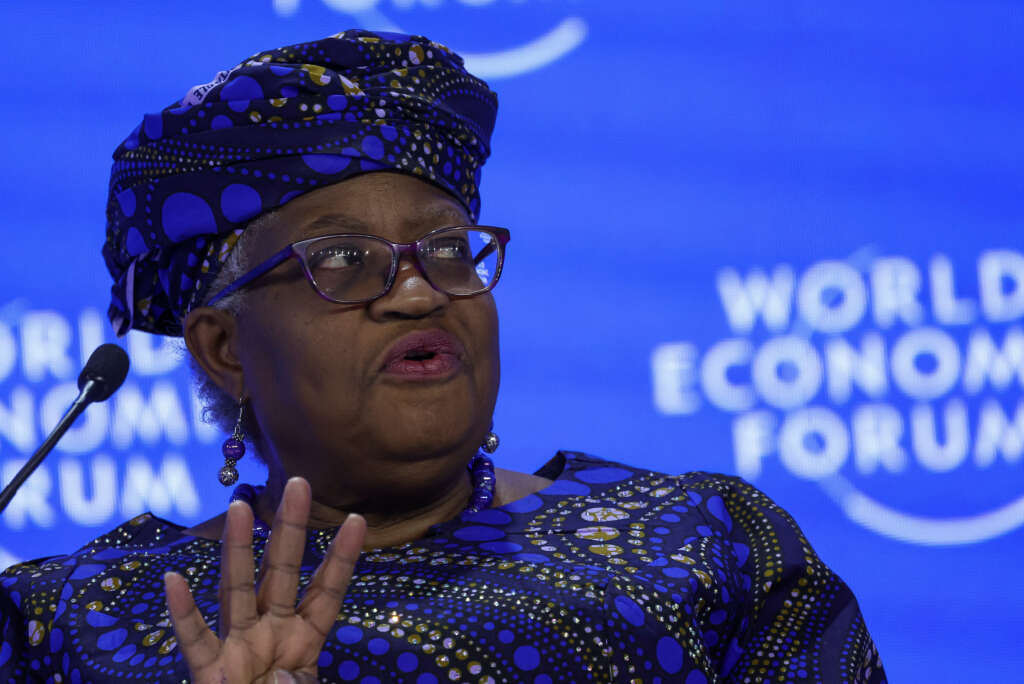
Credit: World Economic Forum Ngozi Okonjo-Iweala, Director-General of the World Trade Organization talks about Tariffs and economic fragmentation. Image: REUTERS/Yves Herman
5. Tech as a Bridge, Not a Divide: It is incumbent on policymakers to push for measures that create equitable access to technology, like for instance public-private partnerships to expand digital infrastructure in underserved areas. This will narrow the digital divide and promote innovation.
The Institute of Public Policy and Diplomacy Research (IPPDR) Perspective
The Davos Forum is an important platform for international cooperation, which complements a policy arena of cross-sector cooperation between diplomacy, governance, and grassroots realities. As an Institute, we emphasize the following:
Diplomacy as a Strategic Goal
Well-designed, cooperative diplomacy is essential to geopolitically secure the triad. The wealth of knowledge in forums such as Davos must be leveraged to examine mechanisms of peaceful conflict resolution and preventative diplomacy.
2. Reforming Global Institutions
Global governance structures must be adapted to new geopolitical realities. IPPDR suggests utilizing the Davos platform to present implementable reforms like increasing the representation of emerging economies in governing bodies.
3. Integrating Policy with Sustainable Development Goals (SDGs).
Governments must integrate SDGs into national agendas, with a focus on climate action, poverty reduction, and education. Davos provides an opportunity to bring together key stakeholders and lock in commitments for coordinated action.
4. A focus on Social Equity must validate the basis of every decision for policymakers at the forum. The IPPDR demands practical policies that tackle structural inequities and give power back to local communities.
Davos as a Springboard for Action
Credit: World Economic Forum
The Davos Forum has the potential to be a major platform and meeting for global discussion. Yet its future as a driver of change in the vast number of diplomatic discussions on climate issues will largely depend on whether it can redress the imbalance between talk and action.
The forum must act as a connection between global governance systems and local realities, and challenge governments and policymakers to ensure that promises mean action.
Through this all, if Davos continues to do one major thing it can still do in spades — bringing together people from all walks of life, related to a myriad of industries, with a focus on helping Sisyphean efforts of addressing inequitable capitalism — prioritizing not only personal accountability for rampant inequity in societies, but collective accountability to foster true progress in balancing demagoguery and governments to transcend geopolitical fragmentation.
We, as an institute, are ready to provide our expertise and resources to support governments and stakeholders to use this platform for a more equitable and sustainable future.
The United Nations General Assembly (UNGA) stands as a beacon of hope in a world marked by diverse challenges, conflicts, and opportunities. Established in 1945, the UNGA is one of the principal organs of the United Nations, embodying the spirit of international collaboration and diplomacy. This article delves into the significance, functions, and impact of the UNGA, highlighting its role as a crucial platform for addressing global issues and fostering cooperation among nations.
A Multilateral Gathering
The UNGA comprises all 193 member states of the United Nations, making it the most inclusive international forum. Each year, representatives from these nations converge in New York City for the General Assembly session, which typically runs from September to December. This gathering serves as a unique platform where leaders, diplomats, and officials from around the world can engage in open and constructive dialogue.
Key Functions of the UNGA
Policy Setting: The UNGA plays a pivotal role in setting the agenda for the United Nations. It discusses and formulates resolutions on a wide range of global issues, including peace and security, human rights, sustainable development, and climate change. These resolutions guide the actions and policies of member states and international organizations.
Peace and Security: While the United Nations Security Council is responsible for maintaining international peace and security, the UNGA can make recommendations on these matters. It provides a platform for member states to address conflicts, share perspectives, and seek peaceful resolutions.
Development: Achieving sustainable development is a central objective of the UNGA. The 2030 Agenda for Sustainable Development, adopted by all member states in 2015, is a testament to the UNGA’s commitment to eradicating poverty, promoting economic growth, and ensuring environmental sustainability.
Human Rights: The UNGA oversees the work of various human rights bodies and promotes the protection and promotion of human rights globally. It has established mechanisms to address violations and promote awareness of human rights issues.
Budget and Administration: The UNGA approves the United Nations budget and financial arrangements. It also elects the Secretary-General and appoints members of the International Court of Justice.
A Platform for Diplomacy
One of the UNGA’s most vital functions is providing a platform for diplomacy. During the General Debate, which marks the beginning of each session, world leaders take the podium to address global issues, present their nation’s perspectives, and engage in bilateral and multilateral discussions. These interactions are vital for building diplomatic relations, resolving conflicts, and advancing international cooperation.
The Power of Resolutions
Resolutions passed by the UNGA carry significant weight in international affairs. While they are not legally binding, they serve as powerful expressions of the international community’s will. Resolutions have been instrumental in shaping global policies and norms. For instance, the Universal Declaration of Human Rights, adopted by the UNGA in 1948, has become a cornerstone of international human rights law.
The UNGA and the Global Agenda
The UNGA has been at the forefront of addressing pressing global challenges. It has played a pivotal role in efforts to combat climate change, promote gender equality, respond to humanitarian crises, and address health pandemics, such as the COVID-19 pandemic. Its ability to convene leaders and mobilize resources makes it an indispensable actor in the pursuit of global peace and prosperity.
Conclusion
The United Nations General Assembly remains a symbol of hope and a testament to the belief that nations, despite their differences, can come together to address shared challenges. Through its functions as a policymaking body, a platform for diplomacy, and a catalyst for global action, the UNGA continues to shape the course of international relations and foster cooperation among nations. As our world faces increasingly complex and interconnected challenges, the UNGA’s role remains as vital as ever in forging a brighter future for all of humanity.
Human rights are the bedrock of a just and equitable society, serving as a shield to protect the inherent dignity and worth of every individual. These rights, often enshrined in national constitutions and international treaties, are universal and inalienable, applying to all people regardless of their background, nationality, or circumstances. The concept of human rights is deeply rooted in the principles of fairness, justice, and respect for humanity. This article explores the significance of human rights, their historical development, and their relevance in today’s world.
Historical Development of Human Rights
The origins of human rights can be traced back to various ancient civilizations and philosophical traditions. However, the modern concept of human rights gained significant momentum during the Enlightenment period in the 17th and 18th centuries. Thinkers like John Locke, Voltaire, and Jean-Jacques Rousseau proposed the idea that individuals possess inherent rights that should be protected by governments. The French Revolution’s Declaration of the Rights of Man and of the Citizen in 1789 further solidified the idea that rights are not granted by rulers but are inherent to all humans.
The aftermath of World War II witnessed the creation of the United Nations (UN) and the adoption of the Universal Declaration of Human Rights (UDHR) in 1948. This monumental document, influenced by the horrors of the war and the Holocaust, set out a comprehensive framework of fundamental human rights. The UDHR emphasized civil, political, economic, social, and cultural rights, aiming to prevent future atrocities by establishing a common standard of human rights for all nations.
Universal Declaration of Human Rights
The Universal Declaration of Human Rights (UDHR), adopted by the United Nations in 1948, represents a global commitment to the principles of equality, dignity, and justice. Encompassing a comprehensive spectrum of rights – from civil and political to economic and social – the UDHR asserts that these rights are inherent to all individuals, irrespective of their background or identity. Serving as a moral compass for international human rights law, the UDHR resonates as a reminder that every person is entitled to live a life free from oppression, discrimination, and fear, while laying the groundwork for a world where fundamental freedoms and basic human dignities are protected and upheld.
Fundamental Human Rights
Human rights can be broadly categorized into two main types: civil and political rights, and economic, social, and cultural rights.
Civil and Political Rights: These rights encompass the individual’s freedoms and protections from government interference. Examples include the right to life, liberty, and security; freedom of expression, religion, and assembly; and the right to a fair trial. These rights are crucial for safeguarding personal autonomy and enabling active participation in society.
Economic, Social, and Cultural Rights: These rights focus on ensuring individuals’ well-being and quality of life. They include the right to education, healthcare, housing, and work. Recognizing these rights is essential for achieving social justice and reducing inequality.
The Universality and Cultural Relativism Debate
One ongoing debate in the field of human rights revolves around the universality of these rights versus the concept of cultural relativism. While human rights are considered universal, critics argue that cultural contexts should be taken into account when applying these rights. However, this debate must be approached with caution, as cultural relativism should not be used as an excuse to justify human rights abuses.
Contemporary Challenges
In the modern world, human rights face numerous challenges. Issues such as discrimination, poverty, gender inequality, and lack of access to education and healthcare persist in many regions. Additionally, technological advancements have introduced new ethical dilemmas, such as online privacy concerns and the impact of artificial intelligence on human rights.
Conclusion
Human rights represent the moral and ethical compass that guides societies toward justice, equality, and respect for every individual. As societies evolve, it’s crucial to uphold and promote these rights to ensure the well-being and dignity of all people. The historical journey of human rights from ancient principles to the modern global framework exemplifies humanity’s collective commitment to creating a world where rights and freedoms are cherished and protected.
Donnelly, J. (2003). Universal Human Rights in Theory and Practice. Cornell University Press.
Moyn, S. (2014). Not Enough: Human Rights in an Unequal World. Harvard University Press.
Nickel, J. W. (2013). The Human Rights Debate: Cultural Relativism versus Universalism. UNESCO.
Sen, A. (2009). The Idea of Justice. Harvard University Press.
The Internet has become an essential tool for achieving sustainable development goals (SDGs). The United Nations (UN) recognizes the importance of the Internet in achieving the SDGs and convenes the Internet Governance Forum (IGF) annually to bring together stakeholders to discuss current and emerging Internet governance issues, as well as related opportunities and challenges in an open, inclusive, and transparent manner. The IGF is recognized as the widest-reaching international multi-stakeholder policy forum on Internet governance1.
The Role of Internet Governance in Sustainable Development Goals
The IGF has enhanced the linkages between the Internet and sustainable development. The consensus at the 10th IGF underscored the contribution of Information Communications Technologies (ICTs) and the Internet to the achievement of the recently adopted 2030 Agenda for Sustainable Development2. Goal 9 of the agenda sets an ambitious target to “significantly increase access to information and communications technology and strive to provide universal and affordable access to the Internet in least developed countries by 2020”2.The IGF 2016 Main Session assessed the role of Internet Governance in the Sustainable Development Goals3. The session aimed to exchange views on how the Internet can foster development and how to connect the 53% of the world’s population who are still not online1. The session highlighted the importance of the Internet in achieving the SDGs, including poverty reduction, education, health, gender equality, and environmental sustainability3.
Internet Governance and Sustainable Development: Towards a Common Agenda
The International Institute for Sustainable Development has published a paper titled “Internet Governance and Sustainable Development: Towards a Common Agenda” to facilitate a discourse around linkages among the issues considered under the Internet governance and sustainable development4. The goal of the paper is to identify the key issues that need to be addressed to ensure that the Internet is used to promote sustainable development.
As of 2021, the internet penetration rate in Africa stood at around 43%, which is below the global average of 66%.5 However, between 2019 and 2021, internet use in Africa jumped by 23%.6 The number of people connected to the internet in Africa doubled to 28% over the last eight years.7The internet penetration rate varies by country in Africa. South Africa has the highest internet penetration rate at 68.2%, followed by Tunisia at 66.7%, Mauritius at 64.9%, and Gabon at 62%.9 In Nigeria, there were 109.2 million internet users in January 2022, while in Egypt, there were 75.66 million internet users in the same period10.Despite the growth in internet use, there is still a coverage gap of over 840 million people in Africa who do not have access to the internet7. Expensive internet also hinders investor activity in some African countries8.
According to a new report, Asia now accounts for about half of all internet users in the world12. The internet penetration rate in Asia was 67.4% in 2022, which was more than double the internet penetration rate in Asia in 201113. The Asia-Pacific region has the highest number of internet users in the world, being the most populated region worldwide14.Internet usage in Southeast Asia increased with 40 million new users added in 2021 for a total of 440 million, up from 360 million in 201914. From the year 2000 to 2023, the usage of the internet increased by 1,355%, and in 2023, Asia continues to account for the majority of internet users15.
According to the World Bank, only about 35% of the population in developing countries has access to the internet, compared to about 80% in advanced economies16. However, the global online access rate was 66% in 202217. The total number of internet users in the world is estimated to be between 4.3 billion to 5 billion active users18.Asia accounts for about half of all internet users in the world19. In Africa, the internet penetration rate stood at around 43% in 2021, which is below the global average of 66%20.
Conclusion
The Internet can play a key role in achieving the Sustainable Development Goals. The IGF provides a platform for stakeholders to discuss current and emerging Internet governance issues, as well as related opportunities and challenges in an open, inclusive, and transparent manner. The IGF has enhanced the linkages between the Internet and sustainable development, and consensus has underscored the contribution of ICTs and the Internet to the achievement of the recently adopted 2030 Agenda for Sustainable Development.
Empowering women in technology is essential for the progress of Sub-Saharan Africa. According to the International Telecommunication Union, the gender gap in internet use is highest in the least developed countries, where women are 33% less likely to have internet access than men.
Additionally, women in Sub-Saharan Africa often face unique challenges in accessing and using technology, including limited access to digital literacy training, cultural biases, and socio-economic barriers.
Women, technology, and the SDGs
Promoting women in technology can significantly impact achieving the United Nations Sustainable Development Goals (SDGs) and promoting economic growth and development in the region. A study by the African Development Bank found that increasing women’s participation in the technology industry could boost the continent’s GDP by $9 billion.
One key aspect of promoting women in technology is through public policy and diplomacy.
Governments can take steps to increase access to technology for women and promote their participation in the technology industry, such as through funding programs, tax incentives for women-led tech businesses, and policies that support gender diversity in tech.
Diplomatic efforts can also play a role, such as promoting international cooperation and the exchange of best practices.
Women in Sub-Saharan Africa
The UN SDGs provide a framework for addressing many of the challenges that women in Sub-Saharan Africa face in accessing and using technology.
For example, Goal 5 aims to achieve gender equality and empower all women and girls, which includes increasing their access to technology and technology-related education and training.
Goal 8 aims to promote sustained, inclusive, and sustainable economic growth, full and productive employment, and decent work for all, which can be achieved in part by supporting women entrepreneurs and women-led tech businesses.
Least Developed Countries (LDCs) present the highest gender gap in internet use, where women are 33% less likely to have access to the internet than men, according to the International Telecommunication Union (2020). In Sub-Saharan Africa, only 22.4% of women are using the internet, compared to 33.8% of men.
According to a study by the African Development Bank (2019), increasing women’s participation in the technology industry could boost the continent’s GDP by $9 billion. The study found that only 30% of tech startup founders in Africa are women.
A survey by the World Economic Forum (2020) found that Sub-Saharan Africa has the lowest percentage of women in STEM (Science, Technology, Engineering, and Math) fields, with only 30% of STEM graduates being women.
According to a report by Intel and Dalberg (2019), only 37% of women in Sub-Saharan Africa have access to mobile internet, and only 18% of these women are aware of how to use it.
The same report by Intel and Dalberg found that women in Sub-Saharan Africa face significant barriers to accessing and using technology, including limited access to digital literacy training, cultural biases, and socio-economic barriers.
Conclusion
In conclusion, promoting women in technology in Sub-Saharan Africa is crucial for economic growth and development, and can be achieved through a combination of public policy, diplomacy, and a commitment to achieving the UN SDGs. By empowering women in technology, the region can unlock significant economic and social benefits, reduce inequality, and contribute to a more equitable and prosperous future.
Find more information
For partnerships, training opportunities, and official documentation from CEPA 24 Website: www.ippdr.org Email: info@ippdr.org
References
Intel and Dalberg. (2019). Women and the Web: Bridging the Internet Gap and Creating New Global Opportunities in Low and Middle-Income Countries.
World Economic Forum. (2020). Women and Work: The Facts.
African Development Bank. (2019). Women and Technology in Sub-Saharan Africa: Overcoming Barriers to Progress
ITU. (2020). The State of Broadband 2020: Tackling Digital Inequalities